
Supporting podcasters from 10+ countries on four continents 🇵🇹🇬🇧🇺🇸 with Ana Xavier (The Podcast Space)
Eurowaves #27 Interview

Ana Xavier is an award-winning podcast strategist who supports purpose-led podcasters in transforming their shows into engines for visibility, authority, and revenue. Known for her data-driven yet deeply human approach, she champions multilingual and underrepresented voices in podcasting.
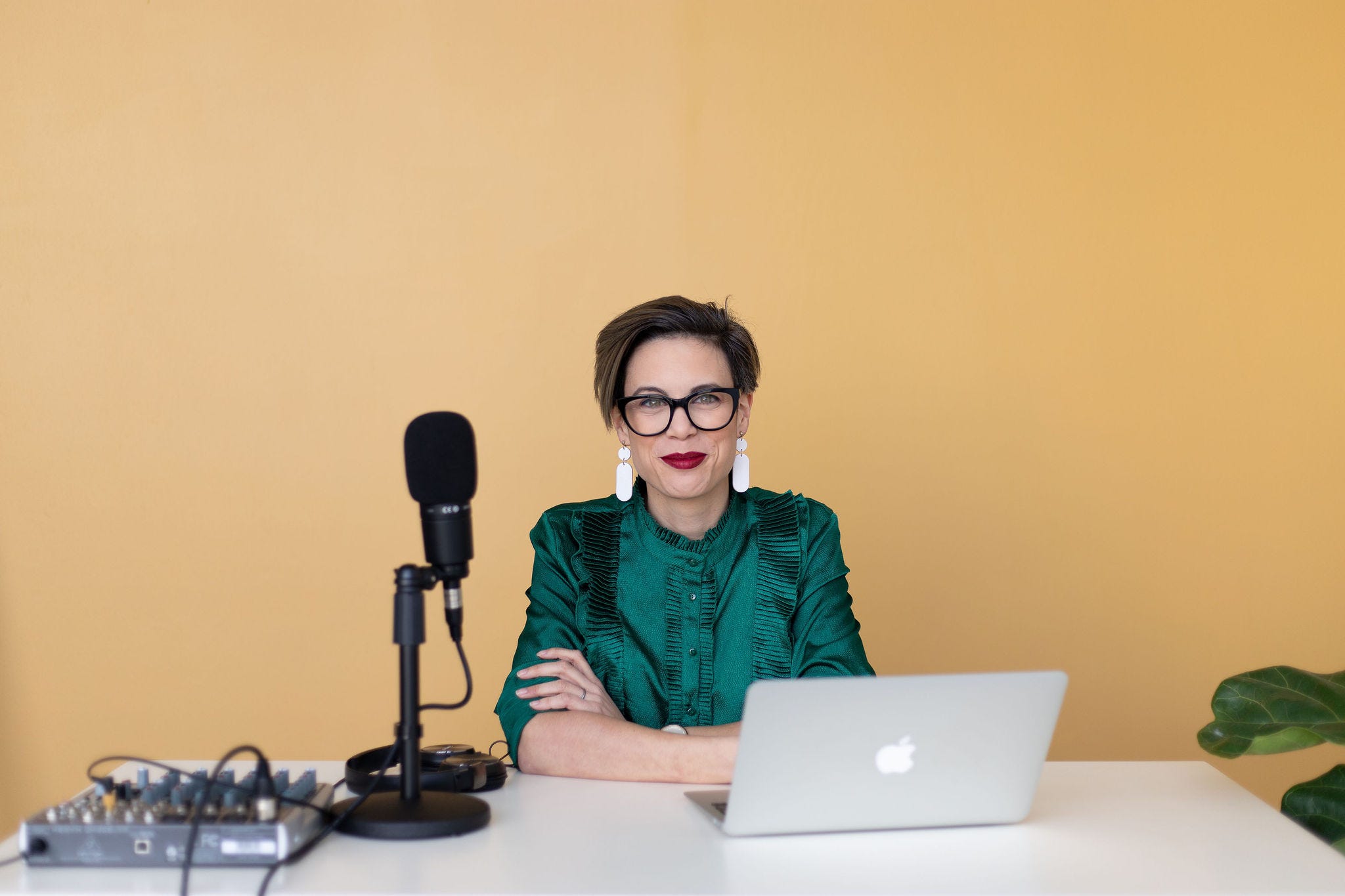
You can connect with Ana on LinkedIn here.
What’s your podcasting journey?
Very much like the majority of the podcast community, my journey has been a beautiful blend of experiences that shaped me into the professional I am today. While I always had a passion for connecting with others and a curious, creative mind, it all started back in 2007 in Portugal when I enrolled in a Science of Communications & Journalism bachelor’s degree in Porto. Joining an extracurricular program at the university quickly deepened my love for radio - I created online shows with self-contained episodes, titles, descriptions, etc. - basically our early version of podcasting before podcasting became mainstream.
I will be forever thankful to my internship mentor (who also instilled in me the importance of constructive feedback), because he told me that hard journalism might not be the best fit for me. With my big personality, he encouraged me to honor that and lean in. That one conversation changed my trajectory and gave me the confidence to pursue a career as an on-air personality/DJ.
I still can’t believe I got to host the weekday afternoon show at my local radio station at just 22. After that, I moved to London to deepen my knowledge of radio production - because honestly, is there a better place to learn than the land of the BBC? I spent almost five years there, working in online community radio and podcast hybrids as part of a collective. I developed my skills in production and scriptwriting in English, and we even partnered with museums and local government to create audio content for their organizations. And during those years, I had all kinds of jobs - sales assistant at one of London’s busiest clothing stores, cafe server and front of house, and eventually digital marketing officer at a nonprofit. Those experiences ended up being invaluable as I moved to the US and started working in a podcast studio in Dallas, Texas.
Back in 2018, podcasting was still niche. When I joined the content department at a PR firm, I got to see the evolution of podcasting firsthand - from something clients struggled to understand to the established industry it is today. Until 2020, I loved being a livestream video producer and producing all kinds of shows: nonprofit-focused podcasts, real estate shows, a travel show about Ireland, and even a salacious dating show where I had to sign NDAs (Non-Disclosure Agreements) because the hosts had to be anonymous. I probably produced over 15 shows in those two years. But when a family member passed away, I realized I wanted to work remotely and exclusively with impact-driven podcasters - and that’s when The Podcast Space was born. I will be forever thankful for my husband who saw my potential and passion for the industry and challenged me to go for it.
From day one, I had a strong vision: a place where podcasters could not only learn about the medium, but use it ethically to elevate their brand online. Being an accidental entrepreneur meant figuring things out as I went, but one thing I knew for sure was that if you want to create something meaningful, it has to go beyond your name and your personal goals. So I wrote articles, filmed videos, and created infographics about what I knew. I leaned heavily into educational content as a marketing strategy, and that paid off tremendously.
Because I’d spent years behind the scenes, I also knew I needed to push myself beyond my comfort zone. Instagram became my training ground - creating bite-sized educational content and filming stories, which felt easier knowing they disappeared in 24 hours. I talked about production, marketing, episode structure, and how to engage listeners on social media. While The Podcast Space began as a remote production agency, it eventually evolved into e-learning, consulting, and coaching for impact-driven hosts.
In January 2023, after stepping away from production, I finally had the capacity to host my own show. And alas - my sixth show, but the first one as a podcasting thought leader—was born: The Podcast Space. It covered content strategy, marketing, metrics, and mindset. At first, the podcast was a place to build confidence, test new features, and experiment while having full creative control. But as I kept releasing solo episodes, I started receiving feedback about how refreshing it was to see a woman showing up on video, podcasting in a language that wasn’t her own. I wasn’t driven by ego - I just wanted to brave the path so more of my clients who were bilingual/multilingual, female, or underrepresented folks could see it was possible for them too.
Plus, it’s been incredible to be a connector for podcasters and peers. Since 2021, I’ve attended podcast conferences, spoken on stages, and become a champion of building connections—online and offline. Podcasters tend to be mavericks, and it can be hard to find others who care as deeply as we do. I encourage anyone I meet to attend conferences - local, national, or international - because for many, those events become the catalyst for taking their podcast seriously and seeing themselves as professionals. And as an extrovert who works from home, I genuinely love meeting and connecting with people. One of my favorite things is covering events and sharing highlights and tips on Instagram Stories—it’s a strategy that has grown my visibility and brought me multiple clients and partnerships. So yes, the fact that I even enjoy using social media probably makes me an outsider in podcasting.
Speaking multiple languages (Portuguese, English, Spanish, and French) has allowed me to attract clients across 10+ countries on four continents and build relationships with global organizations. I grew The Podcast Space from nothing into a recognizable online brand that has partnered with companies like Riverside, Captivate, Ecamm, Popcasts, and Ausha. And now I get to leverage that influence in nonprofit initiatives within the podcasting world. Earlier this year, I joined Podcasthon.org as Head of Strategic Growth & Global Audience Engagement, and it has been an incredible experience.
Today, I’ve built more than 1,500 pieces of content - only 112 of which are podcast episodes - teaching podcasters how to leverage their shows strategically. And honestly, every conversation I have with podcasters reminds me that there’s always more to learn, explore, and play with in this medium.
You’ve built a business in the US as a Portuguese native. You talk about how being an outsider is actually a filter that attracts the right people. How did you mentally flip that switch from being an outsider to it being an advantage?
It actually took me a long time to embrace my background as a strength. This was partly due to experiencing some anti-immigration comments from senior leaders - both in the UK and the US - and also my own personal insecurities. However, I eventually realized it was an advantage and made it a part of my brand. Instead of trying to be “Mrs. Perfect,” I began sharing those insecurities online, which started to normalize them.
This began with small things:
A P.S. in my newsletter stating that since it’s written by someone who speaks multiple languages, it might include occasional grammar mistakes.
Sharing stories of how it sometimes takes me longer to find the right words when recording podcast episodes.
Mentioning the silliness of how sometimes you can only remember the terms you’re looking for in your native language, but not the one you actually need to speak in...
Initially, I did this to try and justify and shield myself from mistakes. But I noticed that this content started getting a lot more responses than my regular posts. Additionally, clients began mentioning it during their discovery calls. As someone who loves nerding out on human behavior, I realized I wasn’t alone in many of those feelings - and this was an ideal customer trait I needed to pay attention to.
Leaning into the fact that I do things to help others in their journey - not driven by ego - boosted my mission even more. Plus, having lived in multiple countries and speaking multiple languages, I became keenly aware of code-switching, which gave me incredible insight into how podcasting is done so differently across those various countries.
Immigrant entrepreneurs have a different relationship with risk and resilience. Is there a specific migrant mindset, maybe something from your Portuguese background, that you think gives international podcasters an advantage?
Absolutely. When you immigrate - especially if you do it often - you have to build your network from the ground up, which many nationals take for granted. Furthermore, as an immigrant, you typically have less of a local support network, which naturally makes you more mindful of establishing connections. However, I believe that’s what’s amazing about podcasting: if you use it strategically, you can very quickly build and nurture a healthy professional network to support your growth. Podcasters are, by definition, people who are open to collaboration, so it’s important not to forget about that built-in opportunity.
Beyond networking, one of the best “migrant mindsets” - and perhaps a great Portuguese trait - is the inherent skill to figure things out, even if the solution is temporary. It’s crucial that we don’t get stuck in the minutia, but also that we don’t just barge in without a plan. Finding a good balance is key. I also believe - and this might sound a bit dark - that it is more important to regret having done things imperfectly than not having done them at all. At the end of the day, action creates feedback, and that feedback is essential to setting things in motion and readjusting along the way. Many podcasters podfade or burn out simply from trying to get it all “right” to avoid public criticism. I say be intentional, but try more scary things to help you realize that you can, in fact, do it.
You work with many bilingual and multicultural clients. Do you advise your clients to lean into their local cultural references, like slang or local stories, to build intimacy, or is it better to keep things general to reach a wider audience?
It actually depends on the client’s specific podcast goal.
Ultimately, the decision boils down to their ideal listener avatar and what elements they need to incorporate to build rapport. I find that a lack of clarity around these two questions creates confusion, which often leads to analysis paralysis when it’s time to script the show or plan the flow.
I like suggesting to clients to adopt a balanced approach: play it safe, but don’t be bland. Include your local cultural references when they are relevant to the topic. Simultaneously, keep in mind audience members who may feel alienated by local slang, specific acronyms, or other localized elements.
Use these references as an opportunity to educate your audience. Explain the term or reference in plain terms - at least once - and then move on. This acknowledges the diversity of your audience while still enriching the episode’s content. So in practical terms, I frequently find myself asking clients probing questions like: ”Is that enough for the audience to resonate with the topic?”; “Tell me more.”; “How would you incorporate more details to invoke deeper emotional resonance for the listener?” I find that after a while, they start being able to make that discernment by themselves.
The core issue if you don’t bring depth to an episode, is that it becomes too ‘vanilla’. Plus, with the rise of tools like ChatGPT and other large language models (LLMs), we need to incorporate more humanity to genuinely connect with the human on the other side. Finally, I think one particular set of clients - journalists, show producers, and editors - struggle the most with leaning into sharing personal stories. This is because it’s often drilled into you early on in your career that you shouldn’t share your perspective or become part of the story, making it difficult for them to pivot to the intimate, personal style often required in modern podcasting.
Looking ahead to 2026, if a European creator wants to stop obsessing over downloads, what would you say is a healthier metric? If they have 200 loyal listeners, what is the win they should be aiming for?
Playing the numbers game is seriously exhausting and the quickest way to feel disappointed about the show. The big overarching theme should be: what do you actually want your podcast to do for you in 2026? Because sure, it’s great to dream about millions of people listening to your podcast, but what’s better is to know exactly what you would want the listeners to do next!
Here are some healthy metrics and measurable objectives to consider:
10% audience increase in comparison to the previous year,
Take time to pitch (and follow-up) with 10 of your dream guests (the answer will always be ‘no’ if you don’t ask)
Receive 1-5 new audience messages per episode
Run 1-5 dynamically inserted ads per year to promote their products and services (for business owners)
Do live streaming parties with your audience once a quarter or record live shows to meet your listeners
Share 1-2 European podcast recommendations with us!
Building your Brand, by Liz Mosley
Mistakes That Made Me, by Eman Ismail
Thank you, Ana!