
Decolonizing Storytelling, with THE ECCO's Jasmin Bauomy 🇩🇪🇪🇬
Eurowaves #29 Interview

Jasmin Bauomy is an award-winning documentary journalist and story editor who spent a decade bending formats for renowned channels, companies and studios before founding THE ECCO, an association for creators of non-commercial documentaries. As a German-Egyptian, she centers her work at the intersection of journalism and art, pushing for updated and decolonized ways of telling stories that prioritize the human condition, which she dives into on TikTok. She recently launched the Rough Cut Residency, a program that kicks off in Marseille in April 2026, designed to help storytellers move from an idea to a finished rough cut in just four weeks.
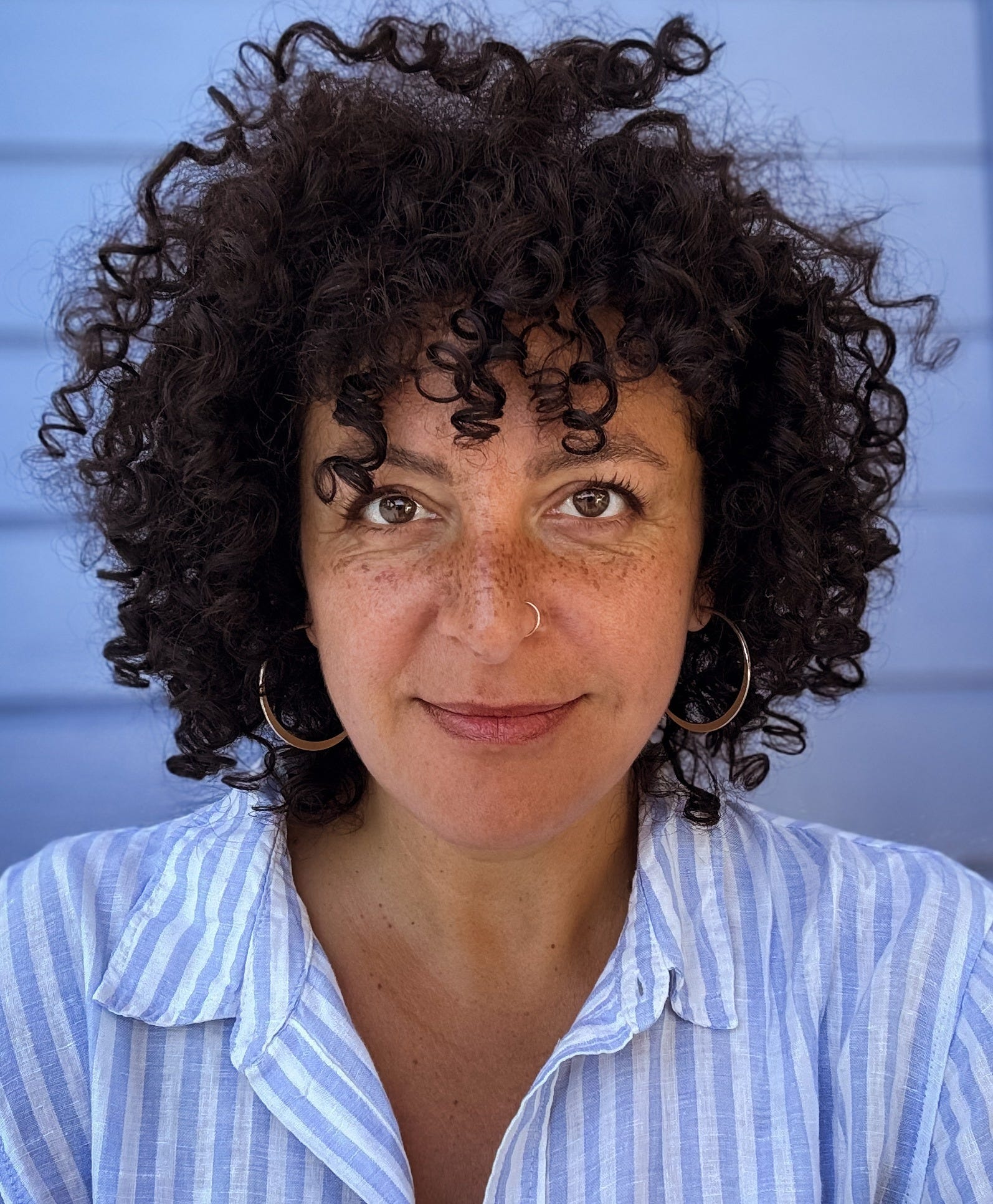
You can connect with Jasmin on LinkedIn here.
What’s your podcasting origin story?
Love that question. Makes me feel like a Marvel superhero, or villain. So I always argue that I started making podcasts when I was 5. My parents were so busy trying to make a living that they didn’t always have time to read me bedtime stories. So instead, my mom and I would sit down in the kitchen after dinner and we’d record the stories that she’d read and I would react to them. That way I was able to listen to these stories / podcasts to go to sleep when they were busy or traveling. That’s how I got started recording conversations and stories on tape.
Why do you think it’s important for European audio storytellers to look beyond their borders and how does taking this community to an international level elevate the artistic process?
Absolutely! Most European and North American storytellers are working with half the storytelling toolkit. Documentarians are abiding by storytelling rules that have been taught in schools for tens, hundreds, if not thousands of years. Don’t get me wrong. I love Aristotle’s “How to tell a story” as much as I love “Out on the Wire” by Jessica Able, or “The Science of Storytelling” by Will Storr. But for one, we live in very different times now and storytelling could and should evolve. And also, a lot of these rules, formulas, tips and storytelling hacks are standing on colonial, capitalist and patriarchal frameworks.
That’s one half of the toolkit. The other half is the storytelling toolkit of the Global South and marginalized communities. It’s time we learn in which way we could decolonize the way we tell stories by learning from ancient and modern storytellers elsewhere. Not just geographically but also in terms of learning from other media. In Arab cinema for example, collectivist storylines are totally normal. In Nigerian storytelling there’s interesting concepts of time and magical realism. In Japanese stories they’re embracing the rejection of efficiency. And there are so many more amazing examples.
I could go on. In fact, I even decided to start a TikTok channel to look into them.
THE ECCO is a space for creators to playfully explore. What’s the most exciting new boundary or experimental format you’ve seen audio creators push in Europe recently?
Because of the way THE ECCO program is designed, most people who are part of it decide to turn the mic on themselves. Telling stories about their own or their family traumas. That’s not something I’m explicitly encouraging, but it makes sense to create such a piece because there’s no commercial intent.
So within that, I’ve seen some cool boundaries being pushed when it comes to how different languages can be used interchangeably and with intent. For example in Brian Byrne’s piece Ní Mise É /It Ain’t Me, which is in Gaelic and English. I also really enjoyed attempts at sonifying the interior, which is something Judith Geffert did in their piece Atemübung / Breathing Exercise. And of course one of my highlights is Phoebe McIndoe’s work, especially the pieces where she manages to talk about trauma in an empowered way. She does so in her ECCO piece Red of Visibility, but also her docu series for the BBC, County Lines.
As a story editor, what are the main elements you look for in a show concept or in the production process, to ensure it will make the story authentic, artful while also reaching a wide audience?
Specificity is probably number one. Rather than general themes I try to find out, what exactly people’s concepts or shows or stories are about. Also, can they already hear it? Do they have a fairly clear vision? Or do they just want to make something for the sake of making something. My brain doesn’t function on abstractions. And I know I’m not alone.
I also always check: What’s in it for them? Why do they want to or need to tell this story? Who are they serving? Why should this exist? I’ve found that many audio creators want to create for the sake of wanting to mostly express themselves rather than offering some sort of value. And while there’s merit to doing art for arts sake, that’s not what I’m about. I do believe that stories have been told for thousands of years so that we can learn from them, entertain each other, quell anxieties, broaden our horizons and empathize.
And of course: I always check for their expectations. Are they aiming to get rich? And that’s a priority? Then this is the wrong path. Are they aiming to serve a bigger purpose? Then let’s go.
Share with us 2-3 podcast recommendations and what you love about them.
Radiolab - Quantum Refuge: Wowowow!! What a fantastic episode. It’s playful, lyrical, poetic, scientific. It reminded me of the oldschool Radiolab style, which was playful and experimental. I always appreciate stories where people in crisis are portrayed as people with agency, power and lives and identities outside of their crisis. This one is about someone in Gaza. And dare I say, it was an enlightening and deeply thoughtful listen connecting the war in Gaza to quantum physics.
Signal Hill (#2) - Cotton King: Aside from the fact that I love what Signal Hill stands for and that it is such a fantastic initiative, this particular documentary spoke to me. Omar Etman, who’s Egyptian, did something quite remarkable. He managed to tell the story and history of colonialism and political uproar in Egypt through the lens of his own family, always following his curiosity and never certain of the answers. In today’s Egypt, which is a tough place for journalists, it’s a huge feat to tell such a personal story that carries so much politics.
Thank you, Jasmin!